

The following article is a condensed version of the user guide. You can learn about more features under the Plugin Interface Overview.
Overview
Known for its thick sustain, rich harmonic saturation, and unmistakable wall of sound, the Big Muff quickly became one of the most influential fuzz designs ever created, shaping countless recordings across rock, alternative, and heavy music.
Over time, several variations of the circuit emerged, including the original Big Muff Pi, the smooth Ram’s Head, and the heavier Russian designs.
Artists Presets
The plugin includes artist presets. The presets can be accessed through the plugin preset menu.
Global Plugin Features
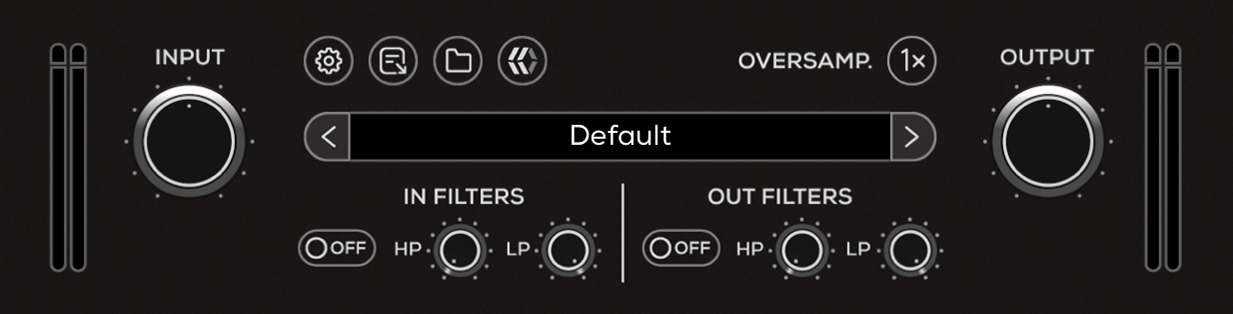
The top section of the plugin includes global controls such as:
Input Gain
Input Filters
Settings
About
Oversample
Preset Browser
Output Filters
Output Gain
Operational Overview
The Electro-Harmonix Big Muff plugin is designed to deliver the distinct character of three classic Big Muff circuits within a single interface, while maintaining a consistent and familiar control layout.
At its core, the workflow is simple:
Select a Big Muff Type to define the overall character of the sound
Shape the tone using Sustain, Tone, and Volume
Use Dry / Wet and global controls to refine the result in your mix
Each Big Muff type operates as its own independent circuit. Control settings and bypass states are stored per mode, meaning switching between Classic (Pi), Ram’s Head, and Russian will recall the last-used settings for that circuit.
Choosing a Circuit
Each Big Muff type offers a different tonal foundation:
Classic (Pi) – A balanced, classic fuzz tone with a wide, scooped character
Ram’s Head – Smoother and more focused, well-suited for lead tones
Russian – Heavier low end with a more aggressive and raw response
While the controls behave the same across all modes, the underlying circuit modeling changes how each setting responds.
Start with Classic (Pi) as a baseline, then explore other modes depending on the role of the sound. Use Ram’s Head for smoother leads or more controlled top end, and Russian for heavier riffs and more low-end weight. If the sound feels too dense, reduce Sustain or blend in dry signal for clarity.
EHX Big Muff Controls
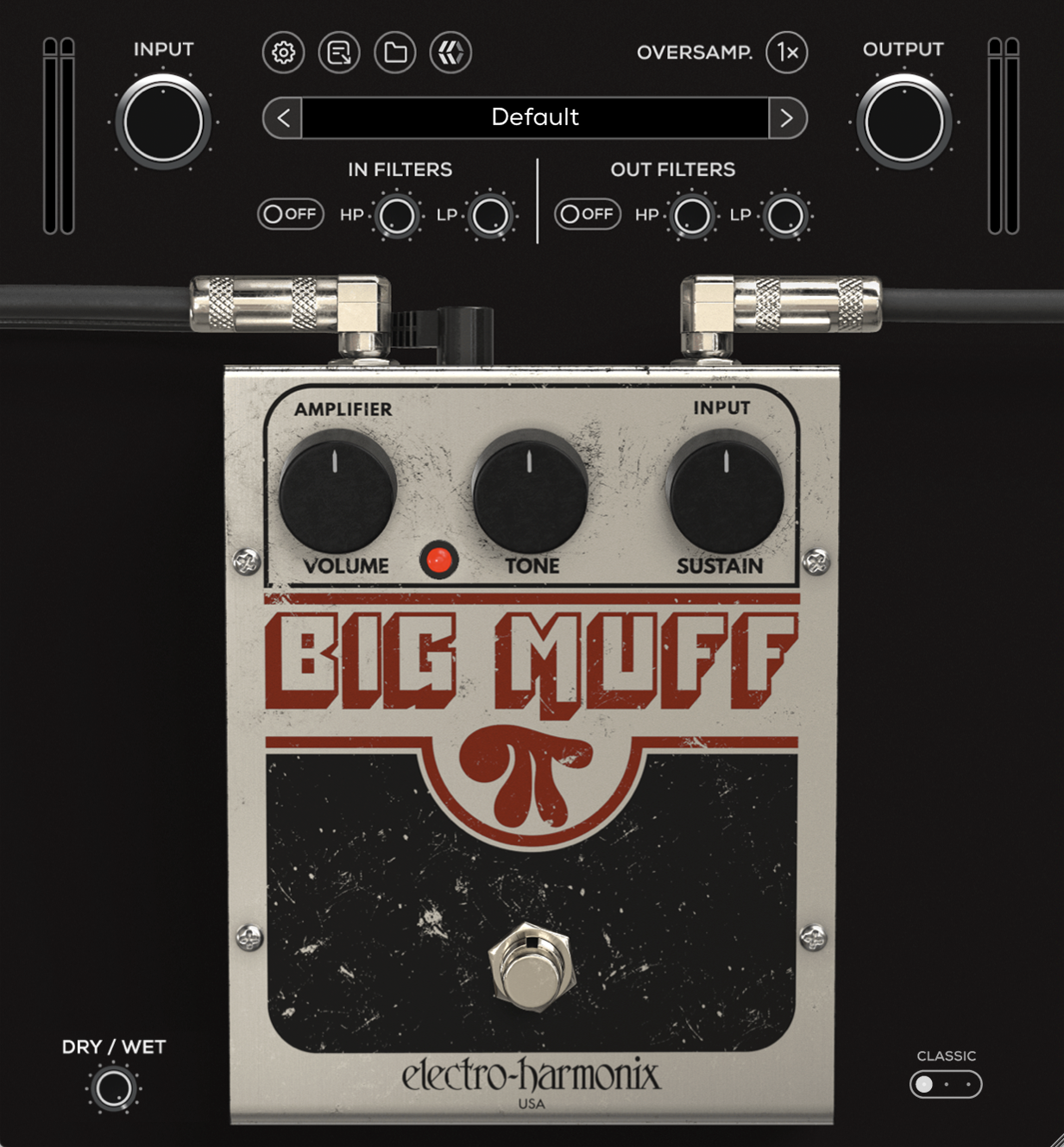
Volume
Sets the overall output level of the pedal.
This control adjusts the final signal level after the fuzz circuit and tone shaping, allowing you to match or boost the level relative to your bypassed signal.
Tone
Adjusts the overall tonal balance of the signal.
Turning the knob clockwise increases treble while reducing bass; turning it counterclockwise increases bass while softening the high end.
The exact tonal response varies slightly depending on the selected Big Muff type, reflecting the unique EQ curves of each circuit.
Sustain
Controls the amount of gain and sustain produced by the fuzz circuit.
Lower settings provide a lighter, more open drive, while higher settings increase saturation, compression, and sustain for a thicker, more aggressive sound.
The character of the sustain will differ between Pi, Ram’s Head, and Russian modes due to their circuit variations.
Pedal Bypass
Engages or disengages the selected pedal circuit.
When bypassed, only the pedal processing is disabled. Global features such as Input and Output filters remain active. To fully bypass the plugin, use the DAW’s plugin bypass control.
Dry / Wet
Blends the unprocessed (dry) signal with the processed (wet) signal from the pedal.
This allows for parallel-style processing, which can help retain clarity and transient detail while introducing the character of the fuzz.
Big Muff Type
Selects between the three available circuit models:
Classic (Pi) – The classic Big Muff tone with a balanced response and familiar mid-scoop character
Ram’s Head – Smoother and slightly more mid-present, with a softer top end
Russian – Heavier low end and a more aggressive, gritty character
Each mode models the behavior and tonal response of its respective hardware circuit while maintaining the same control layout.